Why Do Beeswax Candles Smell Like Honey? Understanding Their Natural Aroma
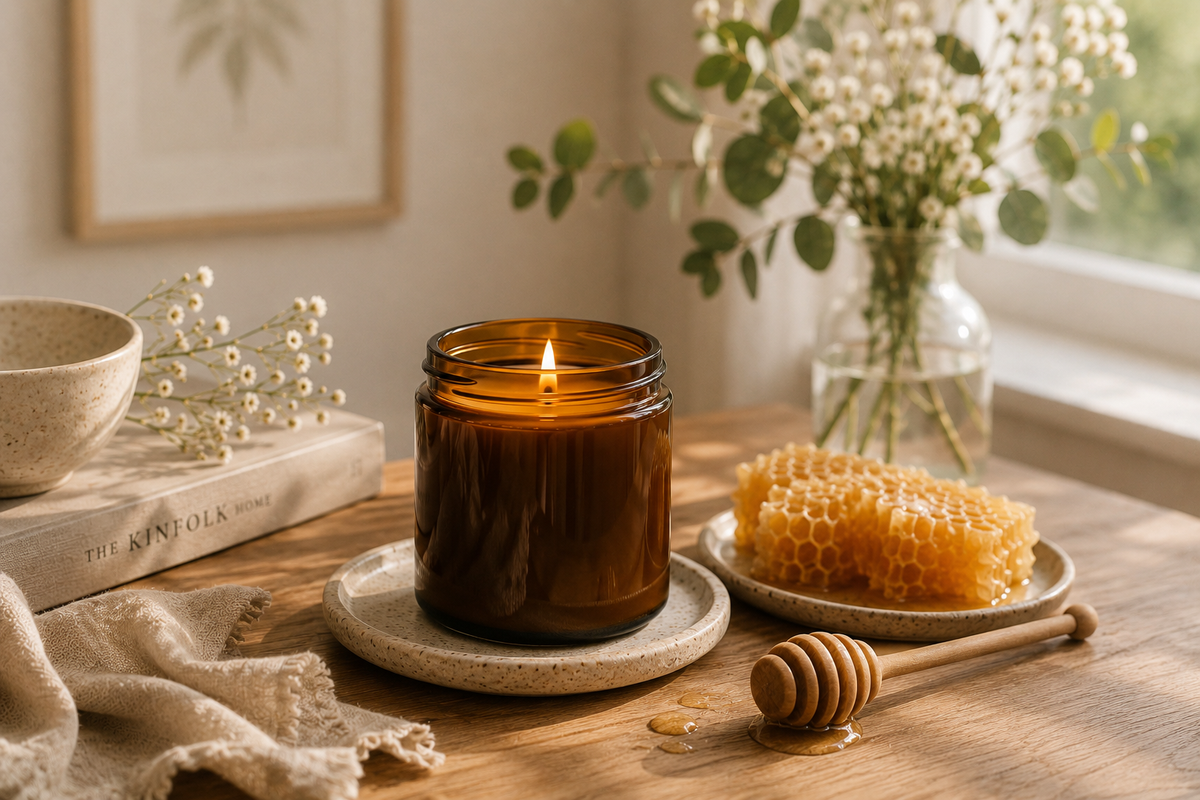
Light an unscented beeswax candle and you may notice something unexpected: even without added fragrance, the wax itself can carry a soft, warm aroma that people often describe as honeyed, floral, or faintly earthy.
That scent is one of the small details that makes beeswax feel different from more neutral candle waxes. But it is also easy to misunderstand. Beeswax does not simply “smell like honey,” and its natural aroma is not identical from batch to batch. What you notice depends on where the wax came from, how it was handled, how much natural character was retained during processing, and even the room in which you burn the candle.
At Solstice Naturals, beeswax is not a decorative talking point added after the candle is designed. It is the foundation of every candle we make. Understanding its natural aroma helps explain why we chose it, why an unscented beeswax candle can still have character, and why scent behaves differently when essential oils or fragrance compositions are added.
Where does the natural scent of beeswax come from?
Worker bees produce wax and use it to build the comb that becomes part of the architecture of the hive. That comb exists in an environment filled with honey, pollen, nectar, propolis, plant resins, and other naturally aromatic materials.
Beeswax itself is distinct from those materials, but it does not develop in isolation. Over time, the wax can take on a subtle sensory character associated with the hive environment. After the wax is harvested and cleaned for use, some of that character may remain.
The result is usually not a strong perfume. Good beeswax often has a gentle warmth that can read as sweet, floral, honey-like, grassy, resinous, or earthy depending on the batch. The aroma tends to sit close to the material rather than filling a room before the candle is even lit.
If you are comparing waxes more broadly, our guide to beeswax vs. paraffin vs. soy wax explains how beeswax differs from other common candle materials beyond scent alone.
Does pure beeswax actually contain honey?
Beeswax and honey are different substances. Honey is food produced by bees from nectar. Beeswax is secreted by worker bees and formed into the comb structure of the hive.
So an unscented beeswax candle should not be thought of as a candle made from honey. The familiar association comes from the wax's origin and the environment in which the comb exists, not because candle wax is simply honey in solid form.
This distinction matters because it sets realistic expectations. If you buy an unscented beeswax candle expecting the room to smell like a jar of wildflower honey, you may be disappointed. If you expect a naturally warm material with a subtle hive-like character, the experience makes much more sense.
Why does beeswax sometimes smell like honey?
Human scent perception works by association. Warm sweetness, floral traces, resinous notes, and the visual color of golden beeswax can all reinforce the impression of honey.
That is one reason two people can smell the same beeswax candle and describe it differently. One person may say “honey.” Another may notice hay, pollen, warm wood, flowers, or simply “wax.” Neither description is necessarily wrong.
Natural materials rarely fit perfectly into one fragrance-note label. The useful way to think about beeswax aroma is as a family resemblance to the hive rather than a standardized honey fragrance.
Why does one batch of beeswax smell different from another?
Beeswax is an agricultural material, not a perfectly uniform industrial ingredient. Natural variation is expected.
The plants available to a colony can change through the year. Geography differs. The age and previous use of comb can vary. Harvesting and filtration practices can differ. Some wax is more deeply colored, while other wax is much lighter. Those differences can influence what you see and smell in the finished material.
That does not mean darker wax is automatically better, or that stronger-smelling wax is more “pure.” Aroma intensity and color are characteristics, not standalone quality grades.
At Solstice Naturals, part of working with beeswax is accepting that the material can show small variations rather than forcing every batch to look and smell chemically identical.
What does raw beeswax mean in a candle?
The word raw can be used loosely in consumer products, so it is worth focusing on the practical idea rather than treating the word as a magic guarantee.
For us, the important point is that beeswax remains recognizable as beeswax. Its natural color and material character are not something we are trying to erase. We want the wax itself to remain part of the product experience rather than acting as an invisible carrier for fragrance.
That material-first approach is explained in more detail on our Why Beeswax? page and our Ingredient Standards.
Do unscented beeswax candles smell strong?
Usually, no. Natural beeswax aroma is generally subtle rather than room-filling.
How noticeable it seems depends on the wax, the size of the candle, how warm the wax becomes, the size of the room, ventilation, and your own sensitivity to scent. Some people notice the wax most when the candle is warm. Others notice it more when they open a container or stand close to the candle.
An unscented beeswax candle is therefore very different from a candle deliberately formulated for fragrance throw. Its appeal is not that it acts like a scented candle without added scent. Its appeal is the understated natural character of the wax itself.
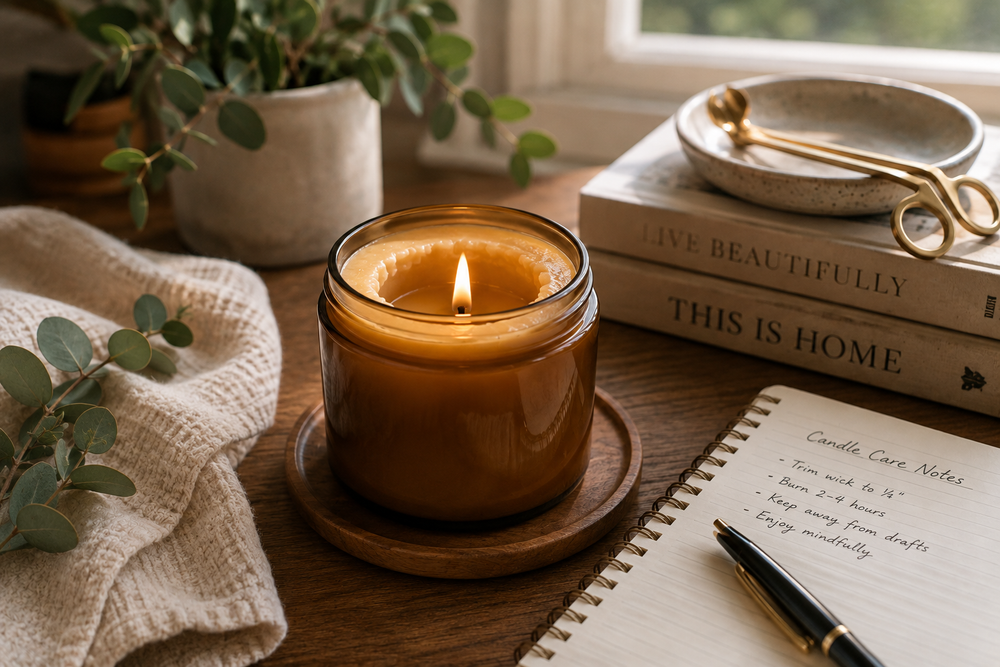
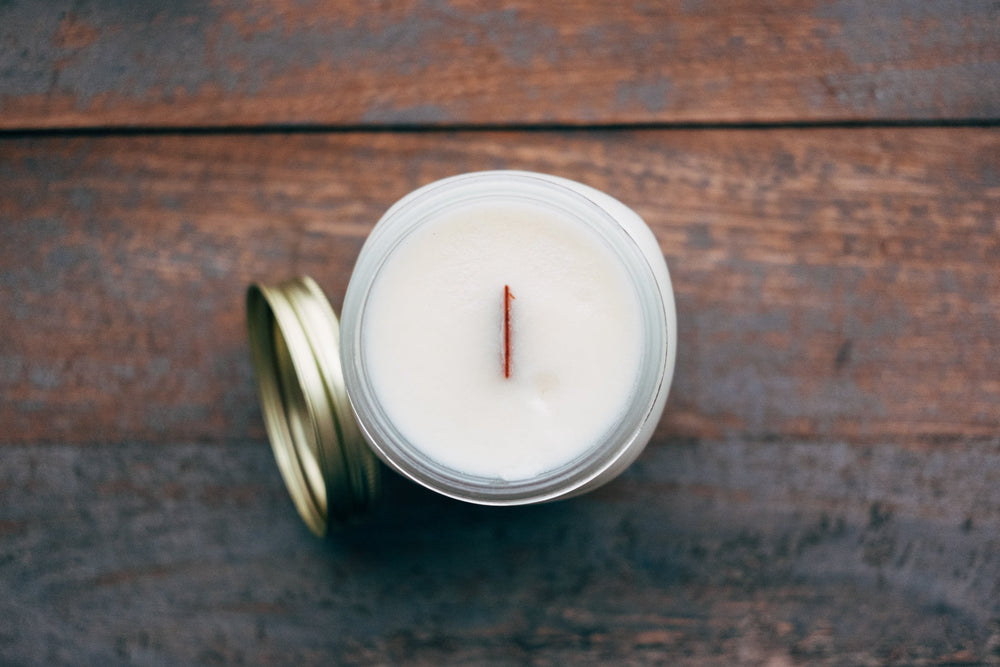
Our Pure Honey candle is the clearest expression of that idea: beeswax without added fragrance, allowing the material to speak for itself.
Does an unscented beeswax candle still have a scent?
Yes, but “unscented” and “odorless” are not the same thing.
In candle terminology, unscented generally means that no fragrance has been intentionally added to create a scent profile. A natural raw material can still have its own inherent aroma.
The same concept applies to many materials we use every day. Untreated wood has a smell. Wool has a smell. Paper has a smell. Coffee beans smell long before anything has been added to them. Beeswax is also a natural material with sensory character.
That is why we prefer clear language: Pure Honey has no added fragrance. We do not need to pretend the wax itself is sensory-neutral.
Does beeswax naturally smell like the flower the bees visited?
Not in a predictable, perfume-like way.
Bees forage across changing landscapes, and finished wax may combine material from many parts of a hive or multiple harvests. Wax is also cleaned before it becomes a candle. You should not expect a beeswax candle from a particular region to reproduce the recognizable fragrance of one flower in the way a deliberately formulated floral candle might.
For example, bees visiting lavender does not mean the resulting beeswax will function like lavender essential oil. The natural wax aroma may be influenced by its environment, but it is not a botanical fragrance extraction.
Think of the aroma as part of the wax's origin story rather than a precise scent note.
What happens to beeswax aroma when the candle burns?
As a candle burns, heat changes the way aromatic compounds reach your nose. The warmed wax can make its subtle natural character easier to notice, especially near the candle.
At the same time, a burning candle creates a much broader sensory experience than fragrance alone. There is the warm color of the flame, the glow through the vessel, the developing melt pool, and the way the ritual changes the room.
That is one reason people sometimes describe unscented beeswax as more aromatic than it would appear from smelling a cold block of wax. Heat and context can make a quiet material more noticeable without turning it into a strong home-fragrance product.
What happens when essential oils are added to beeswax?
When essential oils are used, the natural beeswax aroma becomes a background note while the botanical aromatic materials define the main scent profile.
That is the approach behind our Pure Collection. Pure candles begin with beeswax and use essential oils for the added scent story. The result tends to stay close to recognizable botanical territory: lavender, eucalyptus, citrus, herbs, woods, and similar plant-derived aromatic profiles.
Beeswax itself is not neutral, so the final candle is a relationship between the wax, wick, vessel, and aromatic materials. A candle formulation has to be tested as a complete system rather than treating scent as something that is simply poured into wax.
What happens when fragrance oils are added?
Fragrance oils allow a broader scent vocabulary. They can create atmospheric or layered profiles that do not exist as practical essential oils on their own.
That is why we created the Artisan Collection. Artisan candles still begin with American beeswax, but they allow carefully selected fragrance oils or fragrance-and-essential-oil blends when a more complex scent story calls for them.
A warm vanilla interpretation, sea-air accord, or coffeehouse-inspired scent cannot honestly be described as though it were simply distilled from one plant. We would rather explain the difference clearly than force every candle into the same ingredient narrative.
Our guide to essential oils vs. fragrance oils in candles goes deeper into the practical differences between those two approaches.
Does the natural beeswax scent compete with added fragrance?
In a thoughtfully formulated candle, the wax and added aromatic materials should work together rather than feeling like two unrelated scents fighting for attention.
How noticeable the beeswax remains depends on the particular wax and the fragrance formulation. In some candles, the wax character may sit quietly underneath the added scent. In others, especially very restrained formulations, you may notice more of the beeswax warmth.
This is part of why we do not think candle making can be reduced to a fragrance percentage or a list of ingredients. The same raw materials can behave differently depending on the rest of the formula.
Is stronger-smelling beeswax better beeswax?
Not necessarily.
Aroma intensity alone is not a reliable measure of candle quality. A strong smell does not tell you how well the candle will burn, whether the wick is correctly matched, how the vessel performs, or how carefully the finished candle was tested.
Likewise, a very pale or lightly scented beeswax is not automatically inferior. Different wax can legitimately have different natural character.
A well-made candle depends on the full system: wax, wick, vessel, fragrance formulation when used, and proper testing. That is why our ingredient philosophy focuses on transparency and craftsmanship rather than using one sensory trait as proof of quality.
What about very deodorized or heavily refined beeswax?
Processing can change the appearance and aroma of wax. Some commercial applications favor highly uniform wax with very little natural scent or color. Other makers prefer wax that retains more of its original character.
Neither description alone tells you everything about quality, but it does affect the experience of the material. For Solstice Naturals, the point of choosing beeswax is not merely to put the word on the label. We want the candle to retain the visual and sensory qualities that make beeswax distinctive.
That philosophy is also why we do not try to hide natural features like subtle color variation or bloom.
What is beeswax bloom, and does it affect the smell?
Beeswax can develop a pale, frosted-looking coating over time known as bloom. It is a natural surface phenomenon associated with beeswax and is not mold or spoilage.
Bloom is primarily visual and textural. It does not mean the candle has gone bad, and it is not a sign that the natural beeswax aroma has disappeared.
If you have noticed a cloudy or chalky film on a beeswax candle, our guide to what candle bloom is explains why it happens and how to think about it.
Does beeswax scent change as the candle ages?
A candle's aroma can evolve over time because aromatic materials are affected by storage conditions, heat, light, air exposure, and the formulation itself.
An unscented beeswax candle may seem slightly different after months of storage, just as a scented candle can change subtly over time. That does not mean aging will always make beeswax stronger or weaker in a predictable way.
The best approach is simple: store candles in a cool, dry place away from prolonged direct sunlight and excessive heat, and keep the vessel covered when practical after the candle has fully cooled.
How should you store beeswax candles to preserve their character?
Keep them somewhere reasonably cool and stable. Avoid prolonged exposure to a hot windowsill, a car, direct summer sun, or other environments where heat can soften the wax or unnecessarily accelerate changes in aromatic materials.
If the candle has a lid, replace it once the candle is completely cool. This keeps dust and debris off the wax and helps protect the candle between burns.
Storage is only one part of good candle use. For the full routine, see our Candle Care page.
How can you get the best aroma from a beeswax candle?
Proper burning matters because scent perception depends partly on the way the candle develops its melt pool.
Give the candle enough time to warm evenly, but do not burn it indefinitely in pursuit of more fragrance. Keep the wick maintained, avoid strong drafts, and let the candle cool completely before relighting.
A drafty flame or poorly maintained wick can change how the candle burns and may introduce smoke or soot that interferes with the intended experience.
For a practical step-by-step routine, read How to Make a Beeswax Candle Last Longer.
Does beeswax purify the air?
You may see claims that beeswax candles “purify” the air, release beneficial negative ions, remove toxins, or function like air-cleaning devices. We do not think those claims should be repeated as fact without strong evidence.
Beeswax can be a beautiful candle material for reasons that do not require turning it into a wellness cure-all: it has a distinctive natural origin, warm color, subtle aroma, and a different material character from many common candle waxes.
If you want a closer look at which common beeswax claims are meaningful and which deserve more skepticism, read Beeswax Candle Benefits: What's Real, What's Proven, and What to Know.
Is the honey-like smell a sign that the beeswax is real?
A honey-like aroma can be consistent with natural beeswax, but scent alone is not an authentication test.
Because beeswax varies and can be processed in different ways, a genuine beeswax product might smell quite subtle. Conversely, a candle could be given a honey fragrance without being made from beeswax at all.
If material authenticity matters to you, look for clear ingredient information from the maker rather than relying on one sensory clue.
Our own commitment is straightforward: every Solstice Naturals candle begins with American beeswax, and the scent source is identified through the Pure and Artisan collection distinction.
Why we keep an unscented beeswax candle in the collection
Not every candle needs an added fragrance story.
Pure Honey exists for people who want the atmosphere of a candle—the warm flame, amber vessel, beeswax material, and evening ritual—without intentionally added scent.
It is also useful for households where one person enjoys candles but prefers very restrained aroma, for dining spaces where a strong fragrance might compete with food, or simply for anyone who wants to experience beeswax as directly as possible.
That does not make unscented inherently “better” than scented. It is simply a different choice, and one we think deserves a place alongside both the botanical Pure scents and the more layered Artisan fragrances.
How beeswax fits into the Solstice Naturals scent philosophy
Our scent philosophy begins with the wax rather than treating wax as an anonymous base.
Every candle shares the same beeswax foundation, but the fragrance story can take different paths. Pure stays close to botanical essential oils. Artisan allows carefully selected fragrance oils and fragrance-essential-oil blends. Pure Honey leaves added fragrance out altogether.
Those are three different sensory experiences built on one material standard.
We think that is more useful than telling customers that one category is universally superior. The better choice is the one that fits what you want in your home and gives you enough information to understand what you are buying.
What should you look for when shopping for a beeswax candle?
Start with the basics. Does the maker clearly identify the wax? Is the wick material stated? Is the scent source explained rather than hidden behind vague language? Is the candle described in concrete terms instead of relying only on broad wellness promises?
Then look at how the product is presented. A trustworthy candle does not need to promise impossible things. Good formulation, clear ingredients, thoughtful fragrance, and careful burn guidance are valuable on their own.
If you want a broader framework for evaluating candles, read How to Choose a Clean Candle for Your Home and our Ingredient Standards.
The short answer: why do beeswax candles smell like honey?
Because beeswax is a natural hive material with its own subtle aromatic character. The wax develops in an environment surrounded by honey, pollen, nectar, propolis, and plant-derived materials, and some warm, sweet, floral, or earthy character can remain after the wax is harvested and cleaned.
But beeswax is not honey, and every batch will not smell the same. The natural aroma is usually gentle, not room-filling, and it can shift with the source and processing of the wax.
That variation is not something we see as a flaw. It is one of the reminders that beeswax is a real material with an origin, not a perfectly anonymous base.
A quieter kind of scent
There is a tendency in home fragrance to assume that more scent is always better. Beeswax offers a useful counterpoint.
Sometimes what makes a candle beautiful is not how loudly it announces itself, but how naturally it becomes part of a room: the flame in the evening, the warmth of the vessel, a trace of beeswax close to the candle, and a scent profile—if one has been added—that feels intentional rather than overwhelming.
That is the experience we want Solstice Naturals candles to create.
If you want to experience beeswax with no added fragrance, begin with Pure Honey. If you prefer botanical essential-oil scents, explore the Pure Collection. For richer and more layered fragrance stories, explore the Artisan Collection. Or browse all candles and choose the scent experience that feels right for your home.
The natural aroma of beeswax is subtle by design. It does not need to imitate honey perfectly to remind you where the material began.