Essential Oils vs. Fragrance Oils in Candles: What’s the Difference?
When you shop for candles, two phrases show up again and again: essential oils and fragrance oils. They are often treated as shortcuts for judging a candle before you know anything else about it.
The usual version of the story is simple: essential oils are natural and therefore better, while fragrance oils are synthetic and therefore something to avoid. The reality is more useful—and more nuanced.
Essential oils and fragrance oils are two different tools for creating scent. Each has strengths, limitations, and a place in thoughtful candle making. Neither term, by itself, tells you whether a candle is well made. The wax, wick, scent materials, concentration, formulation, and care taken by the maker all matter too.
At Solstice Naturals, that distinction is important enough that it shapes our two candle collections. Here is what the terms actually mean, why we use both approaches, and what to consider when choosing a candle for your home.
What is an essential oil?
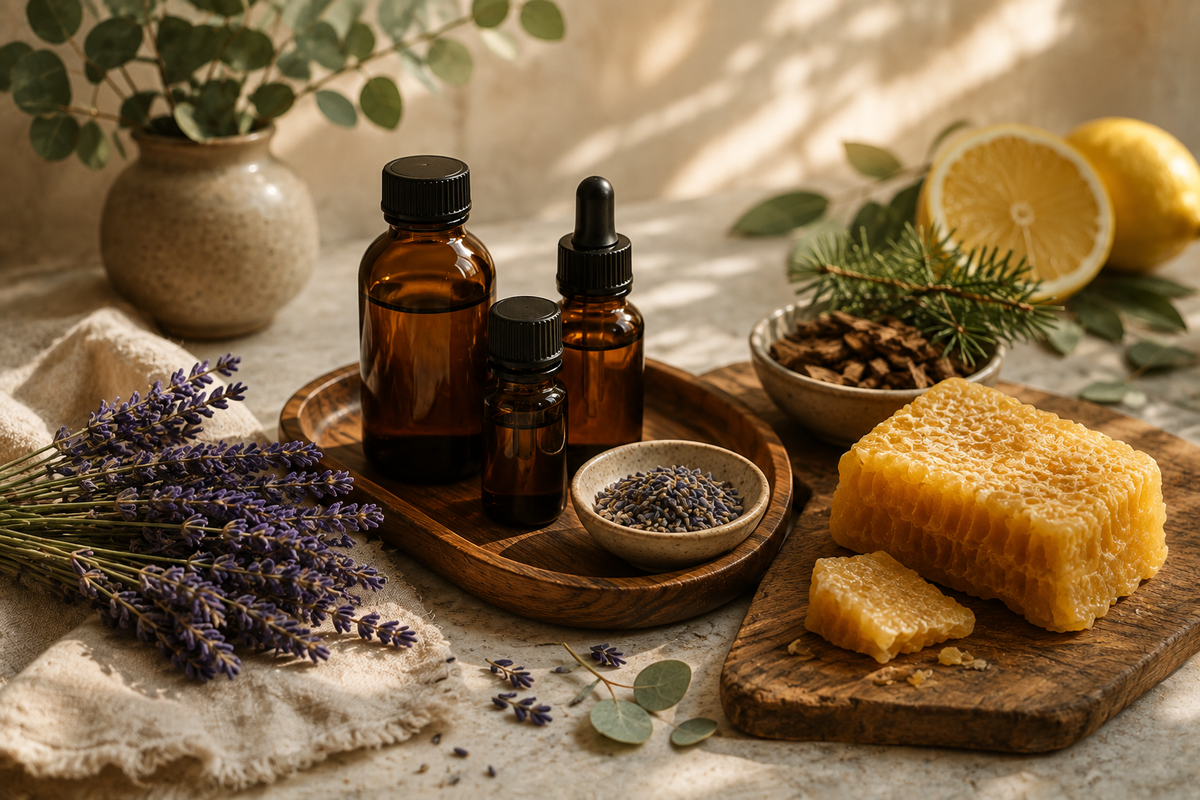
An essential oil is a concentrated aromatic material derived from a plant. Depending on the botanical, aromatic compounds may be obtained through methods such as steam distillation or expression. Lavender, eucalyptus, citrus peel, cedarwood, and peppermint are familiar examples.
Although the phrase sounds simple, an essential oil is not a single ingredient in the chemical sense. It is naturally composed of many aromatic compounds. Its exact character can vary depending on the plant variety, growing conditions, harvest, geography, and processing.
That natural variation is part of the appeal. A true botanical aroma can feel direct and recognizable in a way that suits people who prefer a restrained scent experience. It is also why we avoid using the word natural as a substitute for meaningful information. Plant-derived aromatic materials are concentrated substances and still need to be selected and used thoughtfully.
What is a fragrance oil?
A fragrance oil is a formulated scent blend designed to create a particular aromatic effect. Depending on the formulation, it can contain synthetic aroma molecules, naturally derived materials, or combinations of aromatic materials.
That broader palette allows a perfumer or candle maker to create scent experiences that do not exist as practical essential oils. Think sea air, linen, amber, coffeehouse-inspired accords, or a specific interpretation of vanilla. These are compositions rather than direct distillations of one plant.
Fragrance formulations can also offer consistency and performance in wax. Candle making asks aromatic materials to perform under heat and alongside a particular wax and wick system. A beautiful aroma in a bottle does not automatically become a beautiful candle once it is burned.
Essential oils vs. fragrance oils: the practical difference
The clearest difference is the palette available to the candle maker.
Essential oils keep the scent vocabulary close to aromatic materials that can be obtained from botanicals. Fragrance oils allow a much wider range of composed scent experiences. That does not make one approach inherently superior. It means they are suited to different goals.
If you want a candle whose scent feels distinctly botanical, an essential-oil formulation may be exactly what you are looking for. If you want an atmospheric or layered scent that cannot realistically be expressed through essential oils alone, a fragrance composition may make more sense.
This is the reason Solstice Naturals separates its scented candles into Pure and Artisan rather than pretending every scent can—or should—be formulated in the same way.
Does natural mean safer?
Not automatically.
The origin of an aromatic material is only one part of understanding it. What matters includes the identity of the material, how it is used, the concentration, the route of exposure, and whether it is appropriate for the finished product.
The International Fragrance Association (IFRA) maintains standards that can prohibit, restrict, or set specifications for particular fragrance ingredients based on safety assessments. Those standards can apply to fragrance materials regardless of whether a constituent originated synthetically or occurs in a natural complex substance such as an essential oil.
Essential oils deserve the same thoughtfulness. They are concentrated botanical materials, not simply plants placed into wax. For that reason, we think a more useful question than “Is it natural?” is: Does the maker understand the materials being used and explain them clearly?
Why choose an essential-oil candle?
Sometimes the botanical material itself is the point.
Our Lavender candle and Eucalyptus candle belong to the Pure Collection. Their aromatic character comes from essential oils, and the experience is intentionally close to the botanicals that inspired them.
Lavender is softly floral and herbaceous rather than perfumelike. Eucalyptus leans fresh, green, and restorative. Neither is trying to imitate a complicated perfume accord. Their restraint is part of their identity.
For someone who prefers recognizable botanical aromas or simply likes the idea of an essential-oil-based scent story, Pure offers an easy place to begin.
Why use fragrance oils at all?
Because scent has a much larger vocabulary than the essential-oil palette can provide.
There is no bottle of essential oil that literally captures an ocean breeze. Vanilla is another useful example: the familiar warm vanilla profile people expect from home fragrance is not as simple as adding a “vanilla essential oil” to beeswax.
The Artisan Collection gives us a broader palette. Artisan candles can use carefully selected fragrance oils or blends of fragrance and essential oils to create more layered scent experiences while keeping raw American beeswax at the center of the candle.
Seaside, for example, is an atmospheric composition. It would be less transparent—not more—to imply that an ocean-air scent had simply been distilled from a plant.
For us, ingredient transparency means explaining the approach honestly rather than forcing every candle into the same marketing story.
What does “fragrance” actually mean?
The word fragrance does not describe one universal ingredient. A fragrance oil can be a complex blend of aromatic materials, and its composition can vary significantly from one formulation or supplier to another.
That is why seeing “fragrance oil” in a candle description does not tell you everything about how the candle was made. The wax, wick, aromatic materials, concentration, formulation, and testing all matter.
If those details are important to you, it is reasonable to ask a candle maker what kind of wax and wick they use, whether dyes are added, and how they select the materials used to scent their candles. Our Ingredient Standards page explains the principles behind the materials we choose at Solstice Naturals.
Are essential-oil candles stronger or weaker?
Not necessarily. Scent strength depends on much more than whether the aromatic material is an essential oil or fragrance oil.
The type of wax, fragrance concentration, wick, vessel dimensions, room size, airflow, cure time, and the particular aromatic materials all influence how a candle smells while burning. Some essential oils have naturally assertive profiles. Others are more delicate. The same is true of fragrance compositions.
That is why we prefer describing the intended scent experience rather than promising that one ingredient category will always produce a particular level of fragrance.
What if you are sensitive to fragrance?
If scented products tend to bother you, switching blindly from fragrance oils to essential oils is not necessarily the answer. People can be sensitive to aromatic components from either source.
A more practical approach is to pay attention to the particular products and materials that bother you, use scented products in appropriately ventilated spaces, and stop using a product if it consistently makes you uncomfortable. If you have a medical concern or known allergy, advice from an appropriate healthcare professional is more useful than broad claims made by a candle company.
And there is nothing wrong with choosing no added fragrance at all. Our Pure Honey candle is unscented, allowing the naturally subtle character of beeswax to stand on its own.
What else should you look for when choosing a candle?
Scent source is only one part of the candle. A useful evaluation starts with the whole product.
1. The wax
Wax forms the physical foundation of the candle and affects how it burns. Solstice Naturals uses raw American beeswax. If you want to understand how common candle waxes differ, our guide to beeswax vs. paraffin vs. soy wax is a better place to compare them than relying on a single marketing adjective.
2. The wick
Wax and wick work as a system. The wick has to be appropriately matched to the wax, vessel, and formulation so the candle can develop a proper melt pool and burn consistently.
3. Added color
Color can be an intentional design choice, but it is still useful to know whether the appearance of the wax comes from the material itself or from added dye. Beeswax naturally varies in color, and we like allowing that material character to remain visible.
4. Clear product information
A trustworthy product page should help you understand what you are buying. Look for concrete information rather than a wall of vague adjectives. Our broader guide, How to Choose a Clean Candle for Your Home, walks through the questions we think are most useful before bringing a candle into your space.
Pure vs. Artisan at Solstice Naturals
We created two collections because asking every scent to follow one formula would ultimately make the ingredient story less honest.
Pure Collection: raw American beeswax with essential-oil-based botanical scents, plus Pure Honey for those who prefer no added fragrance. Pure is the more minimal expression of scent in the Solstice collection.
Artisan Collection: raw American beeswax with a broader fragrance palette, using carefully selected fragrance oils or thoughtfully composed blends of fragrance and essential oils when the scent calls for them. Artisan allows us to create more layered, atmospheric profiles.
Neither collection exists because one is the “good” option and the other is a compromise. They exist because transparency matters. If the scent is created differently, we think the customer should know that.
So which type of candle should you choose?
Start with the experience you actually want rather than the label you think you are supposed to prefer.
Choose an essential-oil candle if you are drawn to direct botanical aromas and a restrained scent palette. Explore a fragrance-based or blended candle if you enjoy layered, atmospheric scents that extend beyond what essential oils can realistically provide. Choose an unscented beeswax candle if you would rather skip added fragrance altogether.
Then look beyond scent source. Consider the wax, wick, ingredient information, craftsmanship, and whether the maker communicates clearly enough for you to make an informed choice.
That is ultimately the distinction we care about most.
The Solstice approach
We do not think a good candle has to win an “all natural” purity contest. We care more about being precise about what we are making and giving customers enough information to choose intentionally.
Every Solstice Naturals candle begins with raw American beeswax and is poured in small batches in Gainesville, Georgia. From there, the scent story can take two paths.
Pure stays close to essential oils and botanicals. Artisan opens the palette to carefully selected fragrance compositions and fragrance/essential-oil blends when a more layered scent calls for them.
Different approaches. The same expectation of transparency.
If you are still deciding where to begin, explore all Solstice Naturals candles and compare the scent descriptions, collection type, and ingredient information side by side.
The goal is not to fear an ingredient because its name sounds unfamiliar. It is to know enough about what you bring into your home to make the choice intentionally.