How Long Do Beeswax Candles Burn? What Affects Burn Time
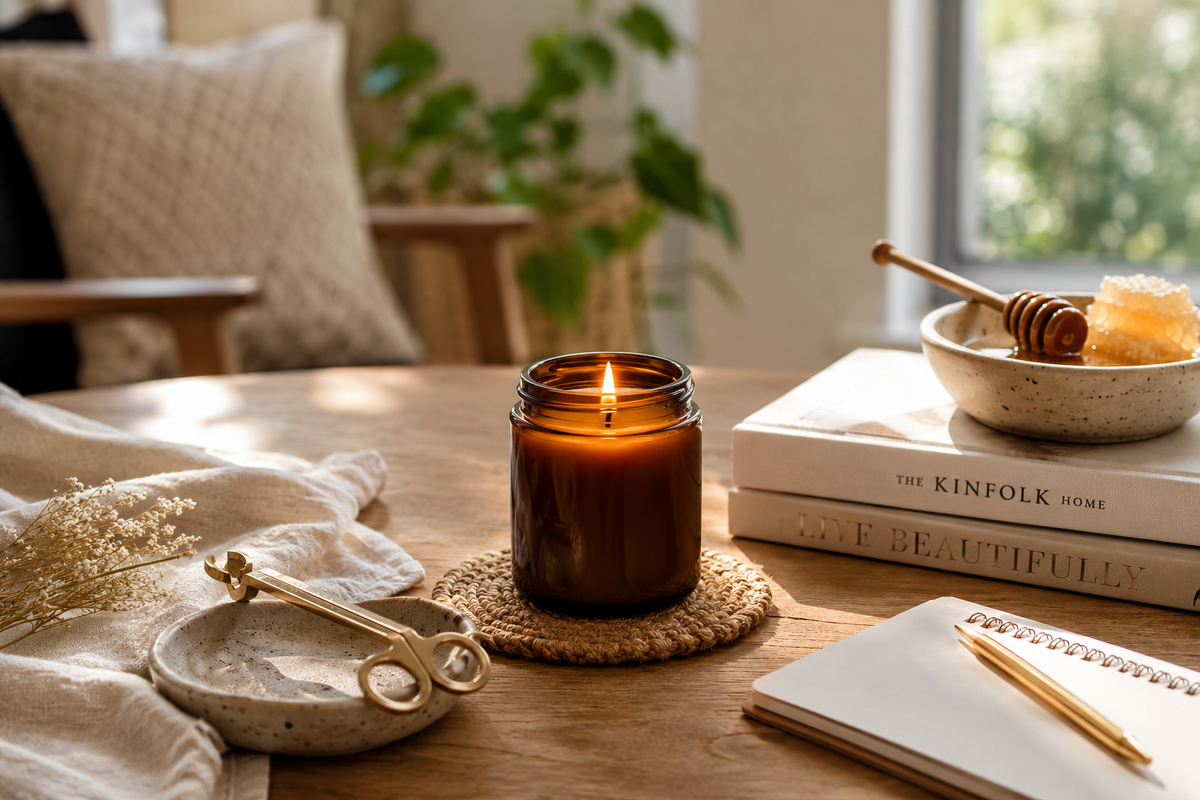
When you buy a beeswax candle, one of the most practical questions is also one of the hardest to answer with a single number: how long will it actually burn? An 8 oz candle may be listed with an estimated burn time, but that estimate is not a timer built into the jar. Wax type, wick size, room conditions, burn length, and even how you handle the first few burns can change the total life of the candle.
That is especially true with beeswax. It behaves differently from paraffin, soy, and many blended waxes. Its naturally higher melting point, dense structure, and the way it interacts with a properly sized wick all influence how quickly the wax is consumed. The useful question is not simply “Does beeswax last longer?” It is what makes a beeswax candle burn efficiently, and what can shorten or extend its useful life?
This guide explains what burn-time estimates mean, what affects them, and how to get the most from a beeswax candle without turning candle care into a complicated ritual. If you are new to beeswax, our Why Beeswax? guide is a good companion to this article, and our full Candle Care page covers the practical basics for every burn.
How long does an 8 oz beeswax candle burn?
There is no universal burn time for every 8 oz beeswax candle because “8 oz” describes net wax weight, not a standardized vessel, wick, or formula. Two candles with the same amount of wax can use different jar diameters, wick sizes, fragrance loads, and wax blends. Each of those variables changes the rate at which fuel reaches the flame.
For that reason, responsible candle makers publish an estimated burn range based on repeated test burns rather than claiming an exact number for every candle. A properly made beeswax container candle should burn steadily, form a controlled melt pool, and consume wax at a rate appropriate for its vessel. The total life of the candle is the result of many individual burns, not one continuous laboratory measurement.
Solstice Naturals product pages list burn-time information for the specific candle rather than relying on a generic industry claim. You can see the current specifications on candles such as Pure Honey, Lavender, and Eucalyptus. Those estimates are more useful than a broad statement about all beeswax candles because they reflect the actual jar, wick, wax, and scent system being sold.
Why beeswax often burns slowly
Beeswax has a relatively high melting point compared with several common candle waxes. In practical terms, that means the wax needs more heat before it becomes liquid fuel for the wick. That characteristic can contribute to a measured, steady burn when the candle is engineered correctly.
But “higher melting point” does not automatically mean every beeswax candle will outlast every soy or paraffin candle. Burn rate is a system. A large wick can consume wax quickly. A narrow candle with a smaller wick may burn more slowly. A heavily fragranced formula can behave differently from an unscented formula. Vessel diameter changes the size of the melt pool that must be maintained.
This is why we prefer to talk about the behavior of the finished candle instead of treating wax type as a magic shortcut. Our Ingredient Standards explain what goes into Solstice Naturals candles, while our article on beeswax vs. paraffin vs. soy wax looks more closely at what is genuinely different among the materials.
The 8 factors that affect candle burn time most
1. Wick size
The wick is the engine of a candle. Once lit, it draws melted wax upward, where the wax vaporizes and fuels the flame. A wick that is too large can create an oversized flame, excessive heat, and faster wax consumption. A wick that is too small may struggle to create an adequate melt pool and can lead to tunneling or a weak flame.
Good wick selection is therefore a balancing act. Candle makers test wick sizes against the exact vessel and formula rather than choosing a wick based only on jar volume. Small differences in diameter and formulation can change which wick performs best.
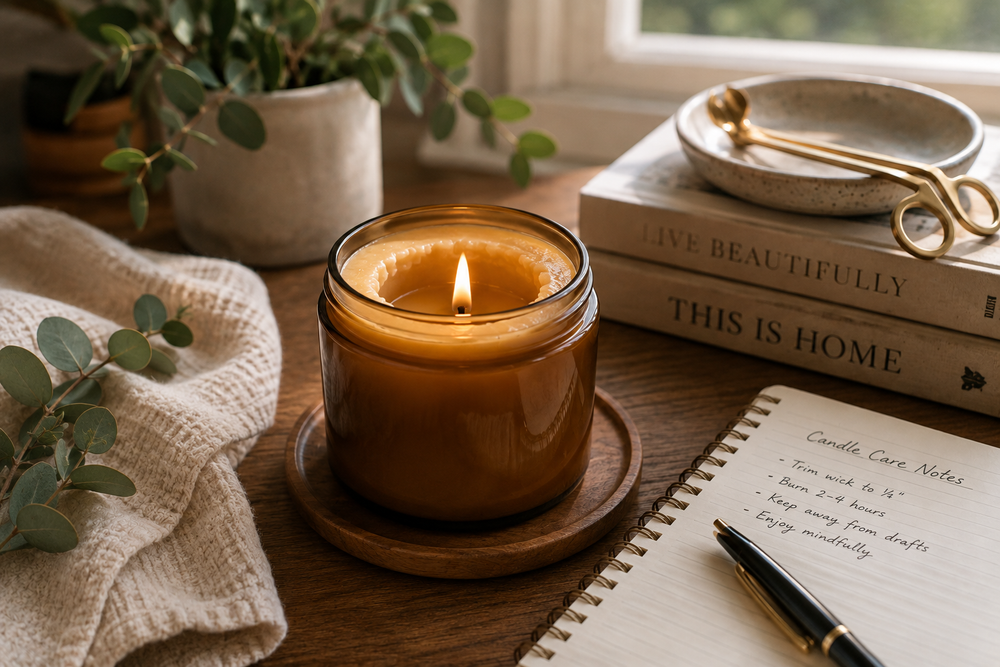
For the customer, the biggest contribution is simple: keep the wick trimmed to the length recommended by the maker. Our detailed guide, How to Make a Beeswax Candle Last Longer, explains why trimming matters and how to correct common burn issues.
2. Vessel diameter
A wider jar requires a wider melt pool. Creating and maintaining that liquid surface takes more heat and can change how quickly the candle uses wax. A narrower container may concentrate heat differently and can often use a smaller wick.
This is one reason comparing candles only by ounces can be misleading. A short, wide 8 oz candle and a tall, narrow 8 oz candle may have noticeably different burn characteristics even if the wax is identical.
3. How long you burn the candle each time
Extremely short burns are one of the easiest ways to reduce the useful life of a container candle—not because they consume too much wax, but because they can prevent the melt pool from developing evenly. Repeatedly extinguishing a candle before enough surface wax has melted can leave a ring of unmelted wax around the perimeter. Over time, the flame may sit lower in the jar while that wax remains stranded on the sides.
On the other hand, marathon burns are not a strategy for getting more value. As the candle remains lit for hours, the vessel and melt pool become hotter. The flame may grow, the wick can develop carbon buildup, and wax can be consumed more aggressively. Follow the maker’s recommended maximum burn session rather than leaving a candle lit all day.
4. The first burn
The first burn matters because it establishes how evenly the candle begins using the wax near the top of the vessel. You do not need to follow internet folklore that says a candle must burn one hour for every inch of diameter regardless of formula. What matters is allowing a healthy melt pool to develop while staying within the candle maker’s safe burn-time guidance.
If the flame looks stable and the melt pool is progressing evenly, let the candle do its job. If you see an unusually large flame, smoke, or other abnormal behavior, extinguish it rather than chasing a perfect edge-to-edge pool at any cost.
5. Drafts and airflow
A candle beside an open window, ceiling fan, HVAC vent, or frequently opened door can burn differently from the same candle in still air. Moving air makes the flame lean and flicker. That uneven heat can cause one side of the melt pool to deepen faster than the other and may increase soot or wick instability.
For both performance and safety, place a candle on a stable, heat-resistant surface away from strong drafts. A calm flame is not just prettier—it is a sign that the burn environment is more controlled.
6. Wick trimming between burns
A wick can develop a small carbon cap after burning. If that excess is left in place, the next flame may be larger than intended. Larger flames generate more heat and can use wax faster.
Before relighting a fully cooled candle, remove the loose carbonized end and return the wick to the recommended length. Do not trim a hot wick over liquid wax; fragments can fall into the melt pool, and handling a hot vessel adds unnecessary risk.
7. Fragrance and essential-oil formulation
Wax is the primary fuel, but added aromatic materials influence the finished formula. Essential oils and fragrance oils are chemically complex mixtures, and they can affect viscosity, combustion behavior, and wick requirements. This is part of the reason scented and unscented versions of a candle cannot always be treated as technically identical.
At Solstice Naturals, the distinction between our Pure Collection and Artisan Collection is intentionally clear. Pure uses raw beeswax with essential oils where scent is added; Artisan uses carefully selected fragrance oils or fragrance/essential-oil blends. If you want to understand why the two approaches exist, read Essential Oils vs. Fragrance Oils in Candles.
8. How much wax is left at the bottom
A candle should not be burned until every visible trace of wax disappears. Container candles need a stopping point because the flame eventually gets close to the bottom of the vessel. Continuing to burn with very little wax remaining can overheat the container and the surface beneath it.
Follow the product’s care instructions for when to stop using it. A small amount of unused wax at the bottom is not wasted craftsmanship; it is part of using a container candle safely.
Does trimming the wick really make a candle last longer?
It can. Wick trimming helps keep the flame closer to the size the candle was designed around. When a wick is excessively long or carries a large carbon buildup, the flame can become taller and hotter. More heat generally means a larger melt pool and faster fuel consumption.
That does not mean shorter is always better. Cutting a wick too aggressively can make the flame weak or difficult to relight. The goal is not to minimize the flame; it is to maintain the intended flame.
Think of trimming as calibration rather than conservation. You are keeping the wick close to its tested operating condition. The benefit is usually a steadier burn, less unnecessary carbon buildup, and more consistent use of the wax.
Why tunneling reduces usable burn time
Tunneling happens when the candle repeatedly burns down through the center while leaving a substantial wall of wax around the vessel. The candle may technically continue to burn, but a portion of the wax is no longer feeding the flame efficiently. That reduces the amount of the purchased wax you can actually enjoy.
Minor early tunneling can sometimes correct itself as the candle burns and the vessel retains more heat. Severe tunneling is harder to reverse. Prevention is easier: use appropriately long burn sessions, keep the candle out of drafts, and avoid an over-trimmed wick.
If your candle has already developed a deep tunnel, do not improvise with unsafe hacks or surround a burning candle with combustible materials. Refer to the maker’s care instructions or contact the brand for product-specific help. Solstice customers can always use our Contact Us page if a candle is behaving unexpectedly.
Does fragrance strength tell you anything about burn time?
Not reliably. A candle with a powerful cold scent is not necessarily using more fragrance than a subtler candle, and fragrance percentage alone does not tell you how quickly the candle will burn. Different aromatic materials have different odor thresholds, volatility, and performance in wax.
Likewise, an unscented beeswax candle is not automatically guaranteed to have the longest burn time in every comparison. It removes one variable from the formulation, but wick and vessel design still matter.
What unscented beeswax does offer is a simple sensory experience: the wax itself has a naturally warm, faintly honeyed aroma that can vary from batch to batch. We explain that in Why Do Beeswax Candles Smell Like Honey?.
How room temperature changes the burn
Normal household temperature variation is not usually dramatic enough to transform a well-made candle, but very warm or cold conditions can influence wax behavior. A candle stored in a hot car, direct sun, or other high-heat environment can soften before it is ever lit. A very cold candle may take longer to establish its melt pool when first brought indoors.
For storage, choose a dry, moderate-temperature location away from direct sunlight. This also protects fragrance quality and reduces unnecessary changes to the wax surface. Natural beeswax may develop a pale crystalline coating called bloom over time; that is a normal characteristic rather than evidence that the candle has expired. Our guide to candle bloom explains what it looks like and what to do about it.
How to get the most useful life from your beeswax candle
You do not need a stopwatch or a complicated ritual. A few consistent habits matter more than perfection:
- Trim the wick before each burn once the candle is fully cool.
- Give the melt pool time to develop instead of lighting the candle for only a few minutes at a time.
- Avoid excessively long burn sessions and follow the maker’s maximum-burn guidance.
- Keep the candle away from drafts so the flame stays stable.
- Center the wick only when safe and necessary, following product care guidance.
- Stop burning before the wax is completely gone.
- Store the candle away from heat and direct sun between uses.
Those habits improve more than longevity. They help the candle burn the way it was designed to burn: with a controlled flame, an even melt pool, and a more consistent scent experience.
Is a longer-burning candle always a better candle?
No. Burn time is useful, but it is only one measure of quality. A candle could be engineered to burn extremely slowly and still have poor scent performance, an underpowered wick, or a frustrating amount of wax left on the vessel walls. Another candle could burn somewhat faster but deliver a stable flame and use nearly all of its available wax evenly.
We look for balance. The wick needs enough energy to create an appropriate melt pool without making the vessel excessively hot. The fragrance needs to be noticeable without requiring an overloaded formula. The wax and wick need to work together from the first burn through the lower part of the jar.
That balance is also why small-batch testing matters. Beeswax varies naturally in color and aroma, and every scent formula adds another variable. A candle is a deceptively simple object; making one that behaves predictably over dozens of burns takes more testing than the finished jar suggests.
What should you compare when shopping for a long-lasting candle?
Instead of looking only for the biggest burn-time number on a product page, look for enough information to understand what you are buying. Useful details include net weight, wax type, wick material, approximate burn range, vessel dimensions, ingredient disclosure, and practical care instructions.
A brand that explains those details gives you a better basis for comparison than one that simply promises “long lasting.” Our Ingredient Standards page explains how we approach disclosure, and the All Candles collection lets you compare the current Solstice Naturals lineup in one place.
The bottom line
Beeswax can support a beautifully slow, steady candle, but total burn time is not determined by wax type alone. Wick size, vessel shape, fragrance formulation, airflow, burn-session length, trimming, and the way the candle is cared for all contribute to how many useful hours you get from the jar.
The best goal is not to stretch a candle for the largest possible number of hours. It is to help it use its wax evenly and safely while delivering the experience it was designed to provide. Trim the wick, give the melt pool reasonable time, keep the flame out of drafts, and stop at the appropriate point near the bottom. Then let the candle be what it is supposed to be: a small, uncomplicated ritual—not another thing to optimize.