How to Make Your Home Smell Better Naturally — Without Air Fresheners
A home that smells good does not have to smell strongly fragranced.
Most persistent household odors have a source: cooking residue, damp textiles, trash, drains, pet areas, shoes, stale air, or moisture. Covering the room with another scent may change what you notice for a while, but it does not remove the source.
A more useful approach is to work in this order: identify the source, clean or correct it, ventilate when appropriate, and then add scent intentionally if you want it.
That last part matters. Fragrance is not automatically a problem, and “natural” scent is not automatically better for every person. The goal is simply to make scent a choice rather than a substitute for solving an odor problem.
Step 1: identify what is actually causing the odor
Before reaching for a candle, room spray, diffuser, or plug-in, walk through the room and ask where the smell is coming from.
Common sources include:
- upholstery, rugs, curtains, and other textiles;
- pet bedding, litter areas, and pet accidents;
- kitchen trash, recycling, compost, and food residue;
- cooking grease on surfaces or in filters;
- bathroom moisture and damp towels;
- shoes and laundry;
- refrigerator spills or forgotten food;
- drains and garbage disposals;
- HVAC filters or dusty return vents;
- hidden moisture, leaks, or mildew.
If an odor is persistent, unusual, or musty, finding the cause is more important than making the room smell pleasant on top of it.
Soft furnishings hold more odor than most people realize
Fabric has enormous surface area and can collect cooking odors, pet smells, smoke, body oils, and ordinary household dust.
Vacuum upholstery and rugs according to the manufacturer's guidance. Wash removable covers, throws, pet blankets, curtains, and washable rugs on an appropriate schedule. If something cannot be washed, follow its care instructions rather than experimenting with a cleaner that may damage the material.
A freshly cleaned room often needs much less added fragrance because the background odor has already changed.
Do not forget the kitchen
Cooking is one of the strongest normal sources of indoor odor.
Use the range hood when appropriate, clean grease filters, wipe nearby surfaces, empty food waste, and ventilate after cooking when outdoor conditions allow.
Some cooking smells are wonderful while dinner is happening and less welcome the next morning. Source control works better than trying to cover them with an unrelated fragrance.
Pet areas need cleaning more than perfume
Pet bedding, litter boxes, blankets, crates, and favorite upholstered spots can become concentrated odor sources.
Use cleaning products appropriate for the material and the animal, wash bedding regularly, and address accidents promptly. If a pet area has a strong recurring odor despite cleaning, investigate the source rather than adding stronger fragrance around the animal.
Pets can also be more sensitive than people to some aromatic products, so more scent is not necessarily the answer.
Check moisture when a room smells musty
A musty smell can point to moisture rather than a fragrance problem.
Look for damp towels, wet bath mats, condensation, leaks, poorly dried laundry, or areas where air circulation is limited. Persistent moisture issues can involve mold or building problems that deserve actual remediation.
A candle should never be used to make a moisture problem less noticeable.
Ventilation can reset a room
When outdoor air quality and weather are suitable, fresh-air exchange can help remove accumulated cooking odors and indoor pollutants rather than simply adding another scent to the same air.
Opening windows is not always appropriate—outdoor smoke, pollen, extreme humidity, traffic pollution, or weather can make it a poor choice. Mechanical ventilation and a properly maintained HVAC system may be more useful in those situations.
The practical principle is air exchange, not “windows are always better.”
Keep HVAC maintenance in the bigger picture
Heating and cooling systems move air through the home repeatedly. Follow the equipment manufacturer's filter schedule and choose a filter compatible with the system.
A clogged or neglected filter can reduce system performance. But an HVAC filter is not a fragrance device, and replacing it should not be treated as a cure for every household odor.
If an odor appears specifically when the system runs, professional inspection may be more useful than masking the smell.
What about air fresheners?
Air fresheners are designed to change the scent of a space. Different products use different fragrance systems and delivery methods, so treating the entire category as one chemical formula is not accurate.
The main limitation is practical: fragrance does not remove an odor source simply because it changes what the room smells like.
If you enjoy a room spray, plug-in, diffuser, or other fragrance product and it is comfortable for your household, that is a personal choice. We simply recommend using fragrance after source control rather than instead of it.
What about “natural” air freshening?
Natural origin does not automatically make an aromatic material gentler.
Essential oils are concentrated mixtures and can be irritating to some people or inappropriate around some pets. Fresh botanicals can also cause allergies. Citrus peels, herbs, and flowers smell beautiful, but they do not purify indoor air simply because they came from plants.
Use scent because you enjoy it, not because the word natural makes it sound risk-free.
How candles fit into a better-smelling home
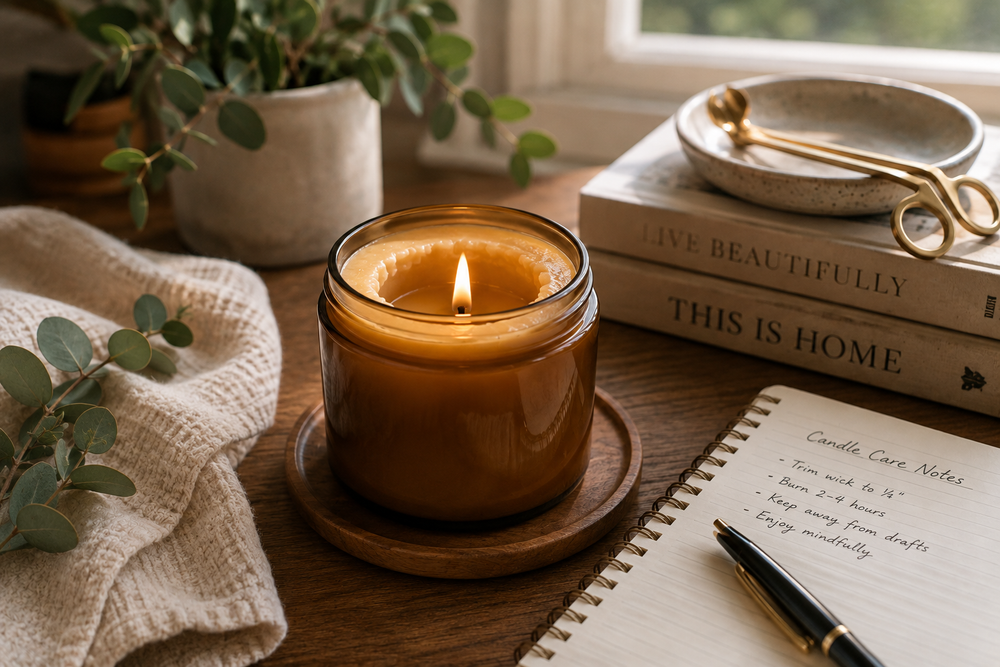
A candle is best used as an intentional layer after the room itself is taken care of.
It can create atmosphere, add a specific scent profile, and mark a transition in the day. What it should not have to do is fight yesterday's cooking odor, a damp rug, or a trash can that needs cleaning.
When the room begins from a neutral baseline, a candle can be subtler and still feel effective.
Choose scent based on the room
Different spaces call for different levels and styles of fragrance.
In a kitchen or dining space, heavy fragrance can compete with food. An unscented candle or a very restrained scent may make more sense.
In a living room, woods, herbs, citrus, or atmospheric blends can help define the mood without needing to dominate the space.
In an evening bedroom routine, a softer botanical or an unscented candle can provide atmosphere—but the candle must always be extinguished before sleep.
Room size matters too. A candle that is pleasant in an open living area can feel intense in a small bathroom.
Eucalyptus for a fresh botanical profile
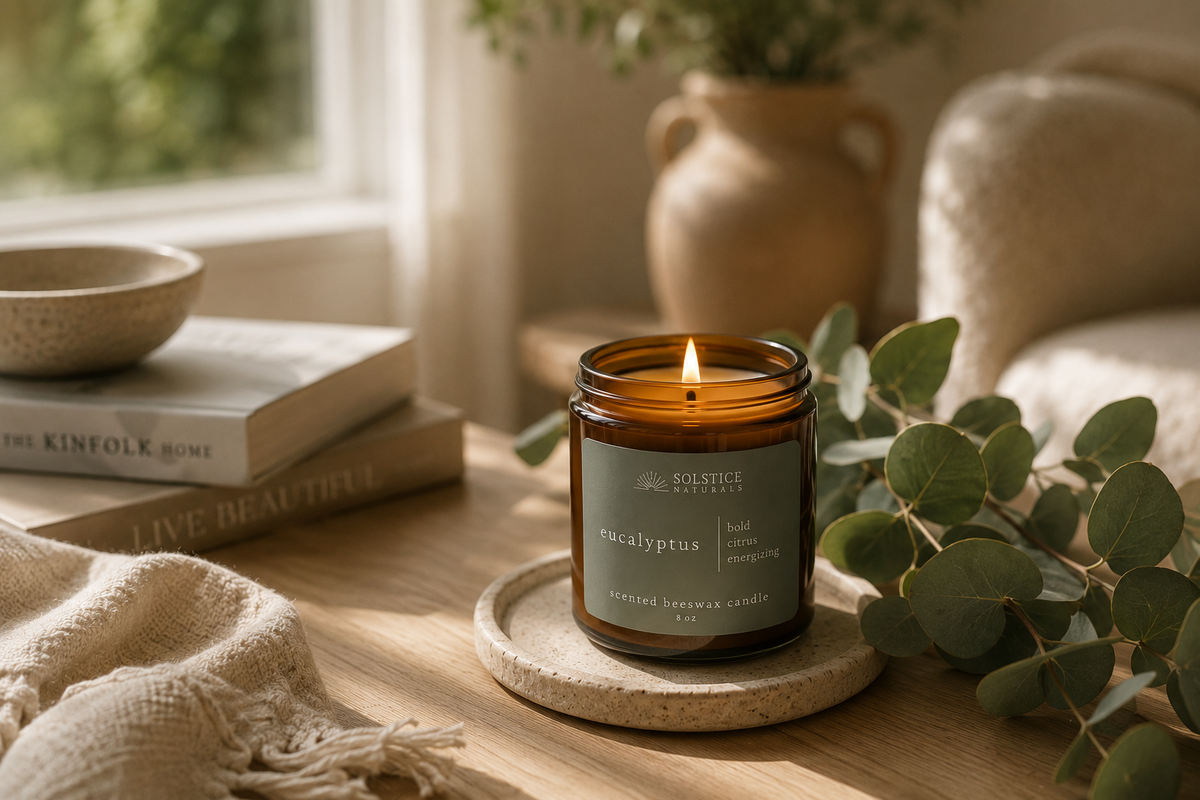
Our Eucalyptus candle is part of the Pure Collection and leans green, herbal, and bright.
We describe it as a scent choice, not an air-cleaning product. Eucalyptus can make a room feel fresh because of its aromatic profile; that is different from claiming it removes contaminants from the air.
If you enjoy crisp botanical fragrance, it is one way to add scent after the room itself has been cleaned and ventilated appropriately.
Lavender for a quieter evening
Lavender has a softer floral-herbal character and works naturally with evening routines.
Again, the goal is atmosphere rather than treatment. A lavender candle does not need to cure insomnia or anxiety to be enjoyable beside a book, bath, or quiet conversation.
If strong fragrance is uncomfortable for you, use less scent or choose unscented rather than assuming essential oil is automatically the answer.
Pure Honey when you want no added fragrance
Pure Honey contains no added fragrance. Its subtle warm aroma comes from the beeswax itself.
That can be useful in dining spaces, small rooms, or households where candlelight is welcome but added fragrance is not.
Unscented does not mean the candle cleans the air. It simply removes intentionally added aromatic material from the formula.
What about Artisan scents?
Sometimes the scent you want is not a simple botanical profile.
Our Artisan Collection allows carefully selected fragrance oils or fragrance-and-essential-oil blends to create more layered, atmospheric scents.
That is not a compromise we hide. It is a different fragrance tool. A sea-air, vanilla, or other composed scent does not need to pretend it came directly from one plant to be a thoughtful home-fragrance choice.
Do candles remove bad smells?
Generally, a standard scented candle adds aroma rather than removing the source of another odor.
Some fragrance technologies are specifically designed to interact with odor molecules, but that is different from assuming any pleasant-smelling candle “neutralizes” the room.
If something smells bad, solve that first. Use the candle because you want the candle's scent.
Can beeswax purify the air?
We do not recommend using beeswax candles as air purifiers.
The popular negative-ion claim is repeated frequently, but a candle is still a combustion source while burning. If indoor air quality is your goal, ventilation, filtration, source control, and building maintenance are more relevant tools.
Our live beeswax candle benefits guide separates the material's genuine qualities from the claims we think deserve more skepticism.
Why fragrance layering can become overwhelming
A room can contain scent from laundry products, cleaners, soap, personal care, diffusers, plug-ins, room sprays, flowers, food, and candles all at the same time.
Even when each individual product smells pleasant, the combined environment can become tiring or difficult for fragrance-sensitive people.
If your home feels over-scented, remove layers before adding a new one. Turn off the diffuser, skip the room spray, and let one deliberate scent have space.
Scent fatigue is normal
Your perception of a constant odor can decrease over time. That is one reason you may stop noticing a fragrance that a visitor detects immediately.
Do not automatically respond by making the scent stronger. Step outside the room for a while, return, and reassess. A fragrance can still be present even when your own nose has adapted to it.
How to make a bedroom smell fresher
Start with textiles and airflow.
Wash bedding on an appropriate schedule, avoid leaving damp towels or clothing in the room, address shoes and laundry, vacuum soft surfaces, and ventilate appropriately.
Then choose scent based on preference. If you use a candle during a wind-down routine, extinguish it before sleep and never leave it unattended.
How to make a bathroom smell fresher
Moisture control is central.
Use the exhaust fan when appropriate, dry towels and bath mats, clean drains and surfaces, and address any persistent moisture or mildew source.
A candle can add atmosphere while you are present, but it should not be used to hide a recurring damp or sewer-like odor.
How to make a living room smell better
Vacuum upholstery and rugs, wash throws and pet blankets, dust, and consider whether the room needs fresh-air exchange.
Because living rooms are often larger, scent may disperse more than it does in a bedroom. That does not mean you need several candles burning at once. One well-placed candle is usually enough to create a focal atmosphere without multiplying open flames.
How to make a kitchen smell better after cooking
Use ventilation while cooking when possible, clean grease and food residue, empty food waste, and let the room clear before adding another scent.
If you light a candle afterward, choose something that works with the environment rather than fighting it. Citrus, herbs, woods, or no added fragrance can feel more natural around food than a very sweet gourmand scent.
A simple routine that actually works
- Find the odor source.
- Clean, dry, remove, or repair it.
- Ventilate when appropriate.
- Reduce competing fragrance layers.
- Add one intentional scent if you want it.
That sequence is less dramatic than promising one product will transform the air, but it is far more useful.
Frequently asked questions
How can I make my house smell good naturally?
Start with source control, cleaning, moisture management, and ventilation. If you want fragrance afterward, choose the scent source you prefer—fresh botanicals, essential oils, fragrance products, or a candle—without assuming natural origin makes it universally safer.
Are air fresheners bad for you?
Air fresheners are a broad category with many formulations. If a particular product causes irritation or headaches, stop using it. If ingredient transparency matters to you, choose a product whose maker provides enough information for your preferences.
What candle makes a home smell fresh?
“Fresh” is a scent style, not an air-quality measurement. Eucalyptus, citrus, herbs, light woods, and some atmospheric blends can create a fresh impression. Choose based on the room and your fragrance tolerance.
Do beeswax candles make the room smell like honey?
Unscented beeswax can have a faint warm or honey-like natural aroma, but it is usually subtle rather than room-filling. Scented beeswax candles are primarily defined by the added essential oils or fragrance system.
Can a candle replace ventilation?
No. A candle adds atmosphere and sometimes fragrance; it does not replace fresh-air exchange, filtration, or correcting an odor source.
What if strong scents give me a headache?
Reduce or remove fragrance, ventilate the space, and choose unscented if you still want candlelight. Our live candle headaches guide explains why scent intensity, individual sensitivity, smoke, and ventilation can all matter.
A better-smelling home starts before the candle
The best fragrance works with a clean, dry, reasonably ventilated room instead of trying to overpower a problem.
Handle the source first. Let the room return toward neutral. Then add the scent you actually want—lightly enough that you can still experience the home itself.
Explore the botanical Pure Collection, the more layered Artisan Collection, or browse all Solstice Naturals candles when you are ready to choose the fragrance layer rather than the odor cover-up.